What a road does.
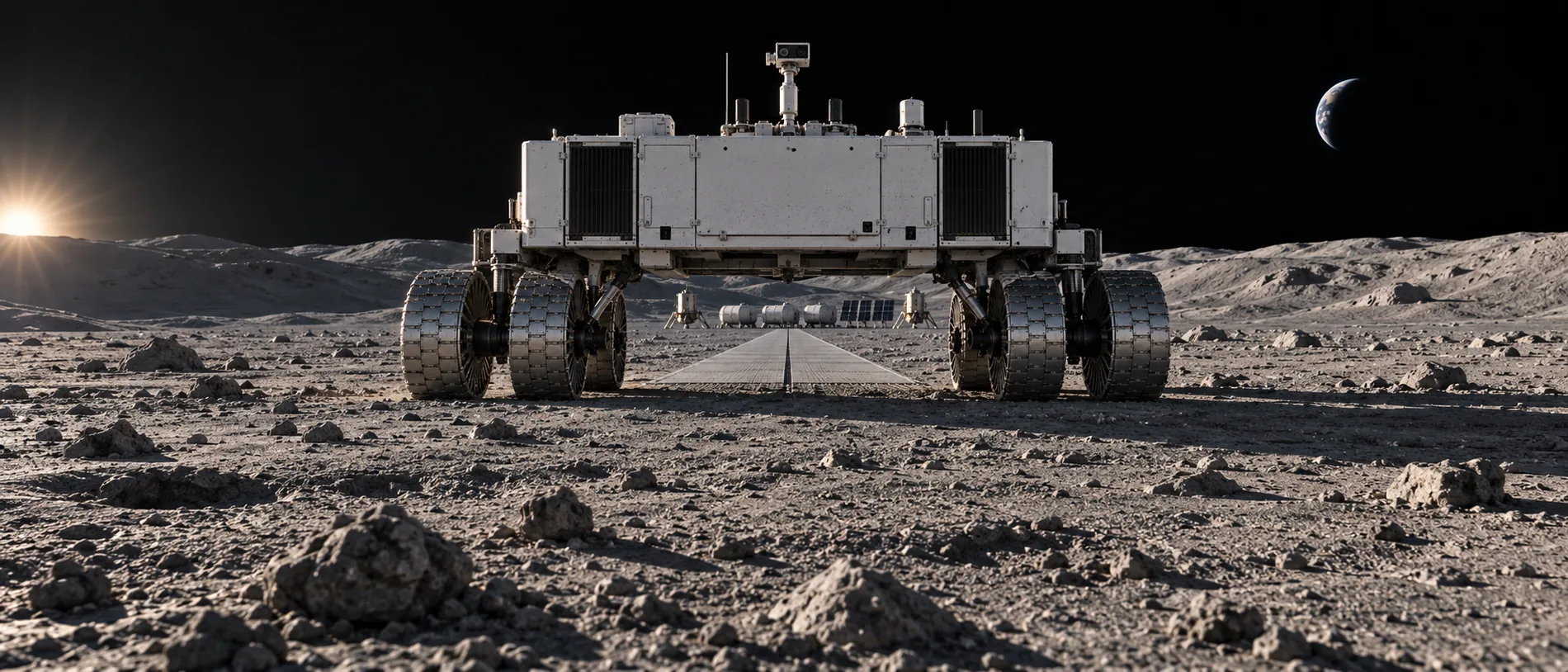
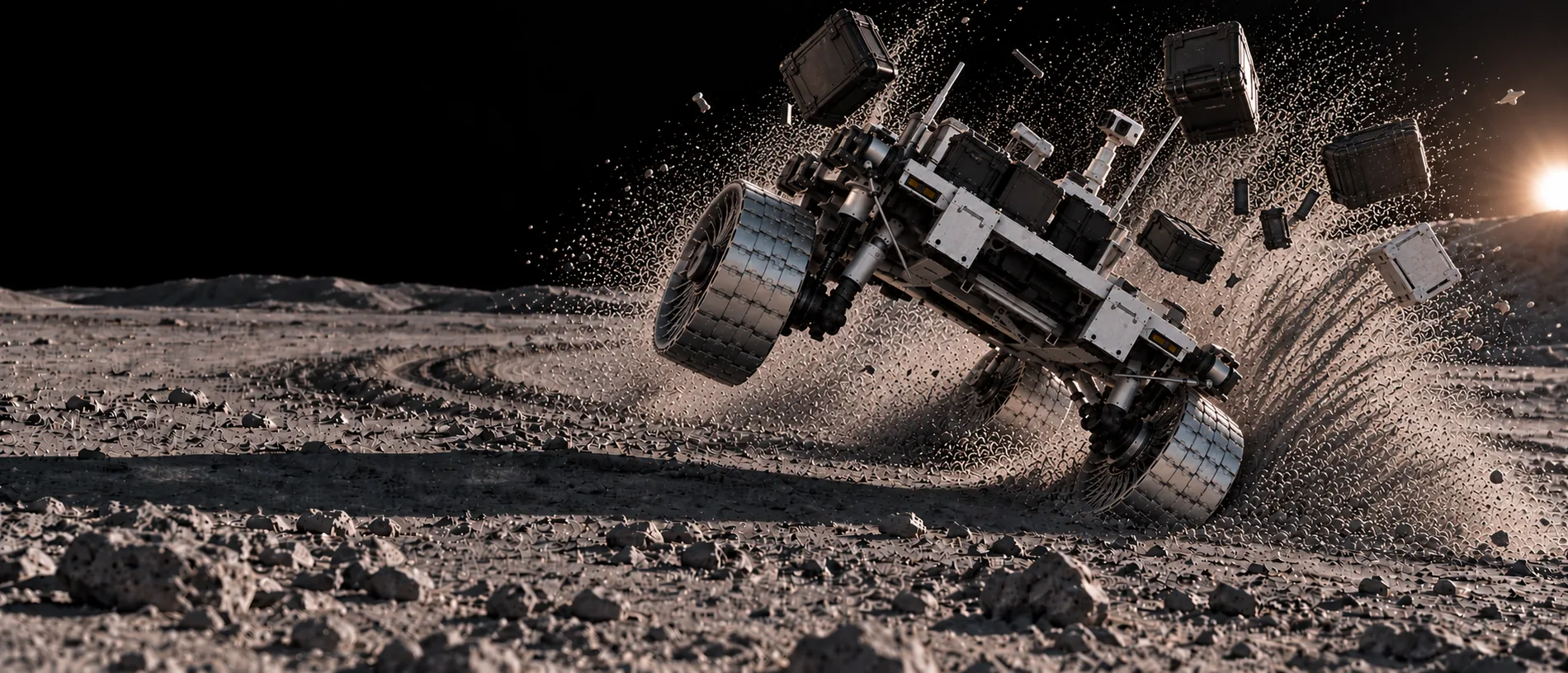
Driving off-road on another world has a track record. It is not a good one.
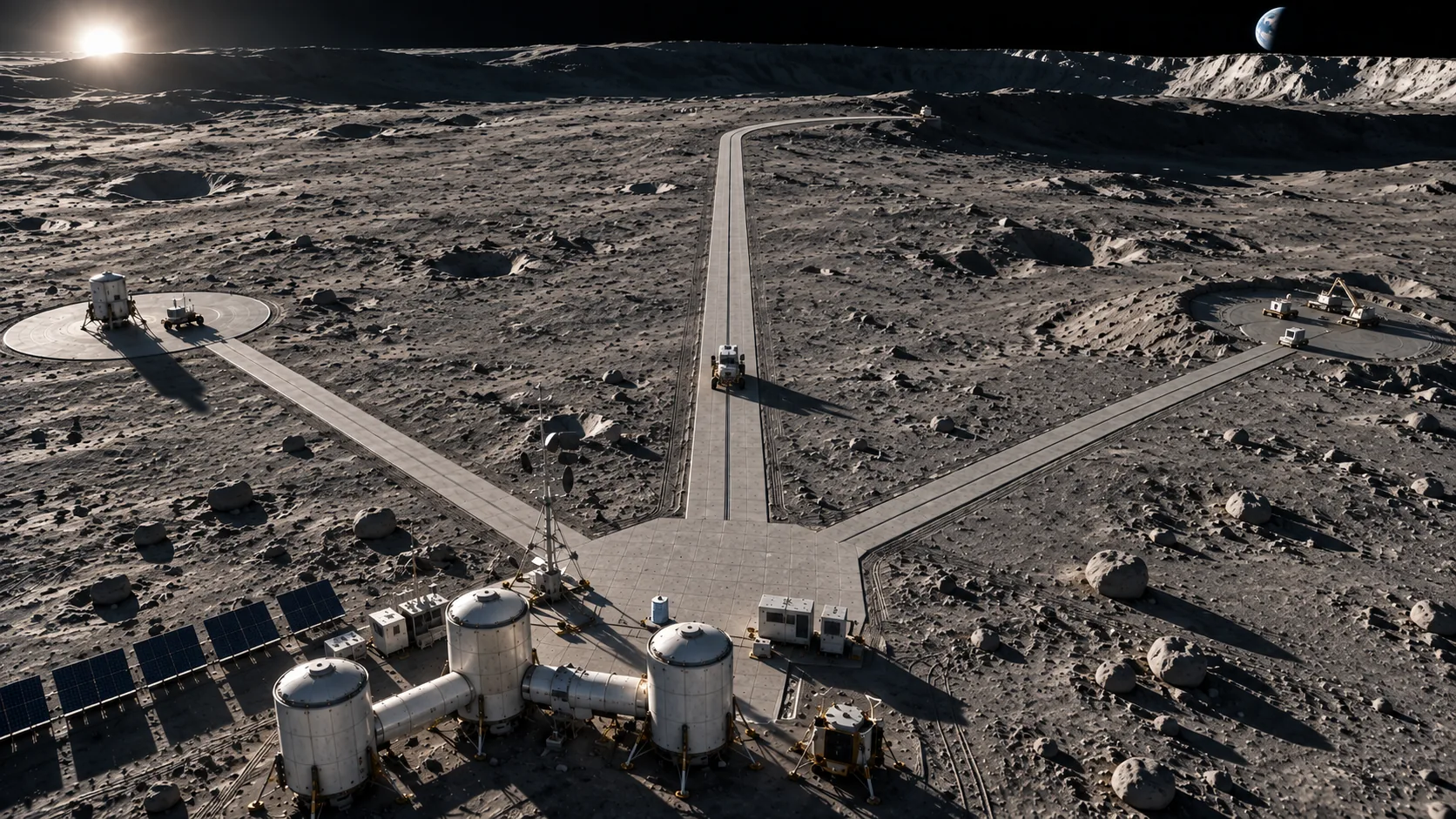
That is the part of this job that is not a joke, and it is most of the job. Roads keep traffic off the places nobody should drive through, which turns out to be a long list.
01
The handling
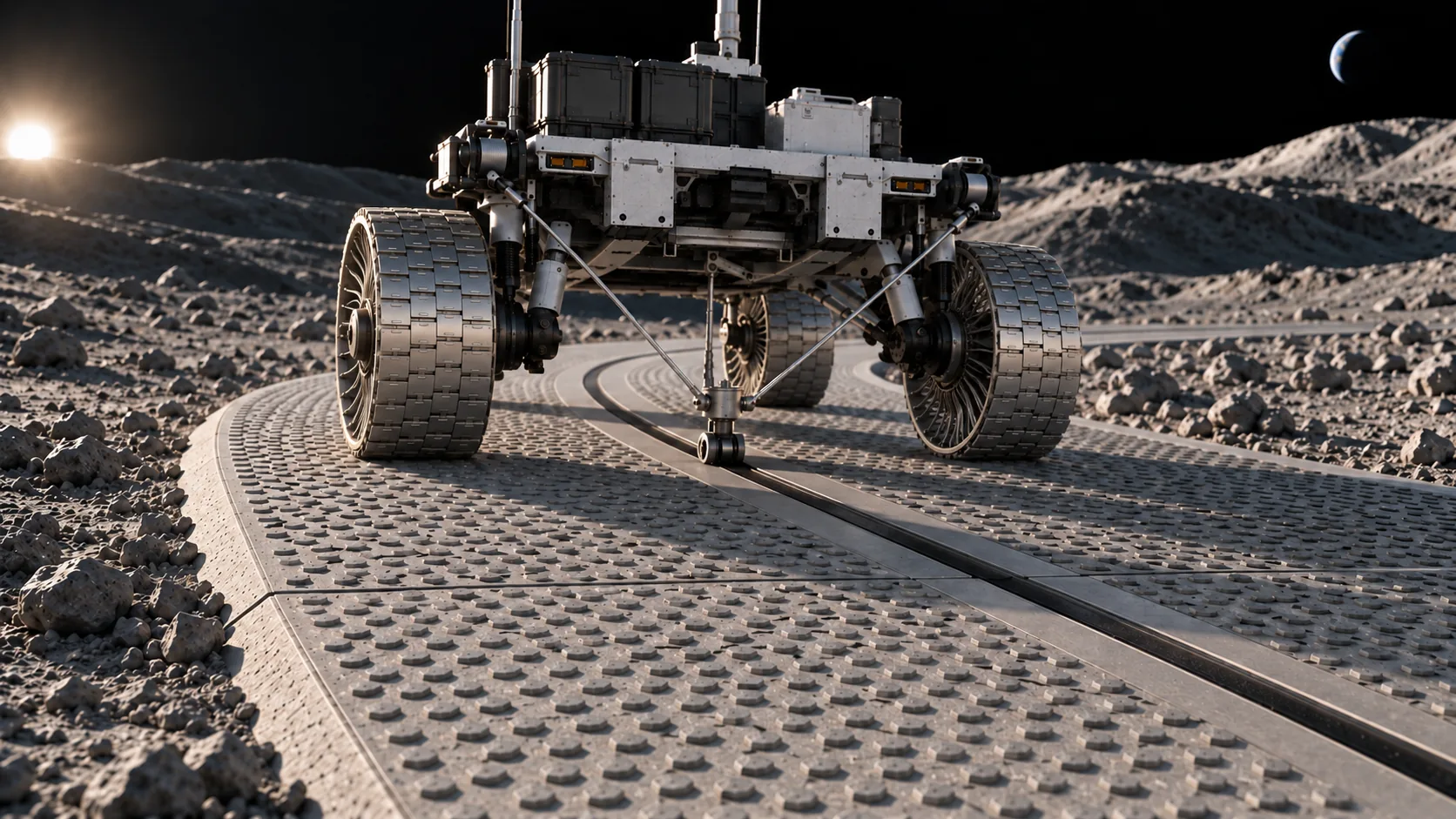
On the Moon a vehicle weighs a sixth of what it does on Earth, so its wheels press into the ground with a sixth of the force, and every bit of grip for steering and stopping shrinks with it. The Apollo crews felt it on every drive. On Apollo 15, any hard turn above 5 km/h sent the rover skidding sideways, and stopping from 10 km/h took about twice the distance it had in training. On Apollo 16, a single turn swung the back end out about 60 degrees, and during a test drive all four wheels left the ground at once. A road is how a vehicle gets its grip back.
NASA Apollo Lunar Surface Journal, Working on the Moon: LRV Performance. Pilot reports from the Apollo 15 and Apollo 16 mission reports.
02
The dust
Every wheel that touches loose regolith throws it, and with no air to slow it down it keeps going until it hits something. Conrad’s suit was more worn after eight hours on the surface than training suits were after a hundred. Dust defeated the sample container seals. When the rover fenders came off on Apollo 16 and 17, the wheels threw regolith over the crew and the console and the batteries ran hot. John Young: “Dust is the number one concern in returning to the Moon.”
Gaier, The Effects of Lunar Dust on EVA Systems During the Apollo Missions, NASA/TM-2005-213610.
03
The ground that looked fine
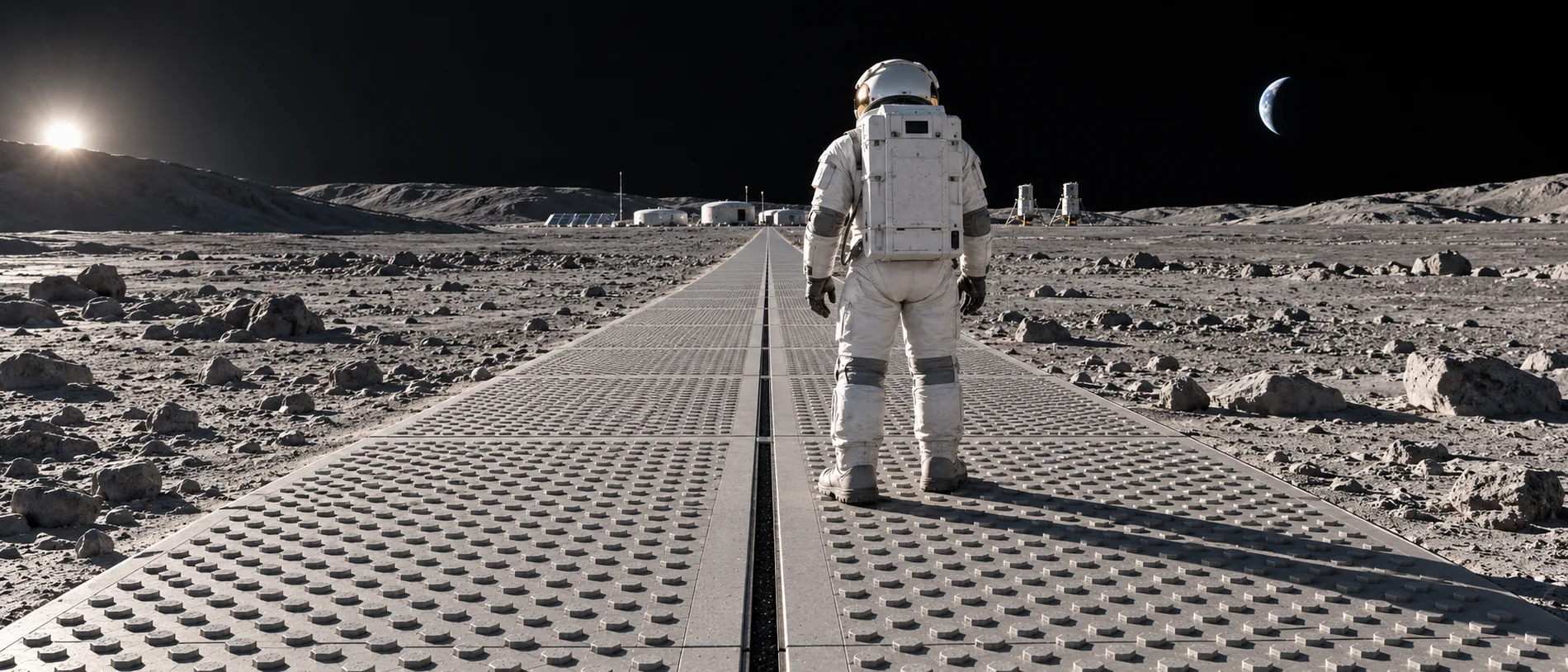
In 2009, NASA’s Spirit rover drove across ordinary-looking ground on Mars, broke through a thin crust, and sank into soft sand hidden underneath. Nine months of rescue attempts failed. It never drove again. You cannot trust ground you cannot see into. A road is ground someone has already checked.
NASA JPL, NASA to Begin Attempts to Free Sand-Trapped Mars Rover, November 12, 2009. Spirit declared a stationary research platform, January 26, 2010.
04
The dark
At the lunar south pole the Sun never climbs more than about 10 degrees above the horizon, so long, fast-moving shadows sweep across the ground. NASA’s VIPER rover had to plan every drive around them, because it could not survive more than 50 hours of continuous darkness. On a road, the way back to sunlight and power is a known route.
NASA Science, VIPER Lunar Operations, September 2023.
 Moon Roads